

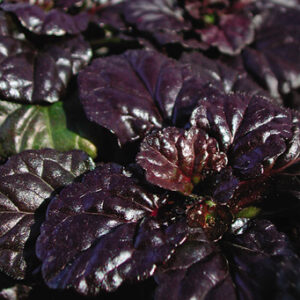
Ajuga, Black Scallop
Dark as night foliage with gorgeously scalloped leaves. A knock-out in patio pots, combos, and as a striking accent with white, gold or light colored plants. Great groundcover
Ajuga, Black Scallop Plug Flat
Dark as night foliage with gorgeously scalloped leaves. A knock-out in patio pots, combos, and as a striking accent with white, gold or light colored plants. Great groundcover
Ajuga, Bronze Beauty
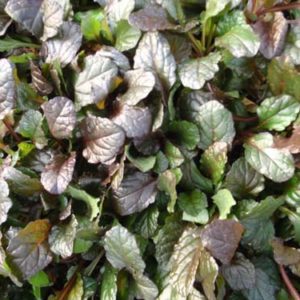
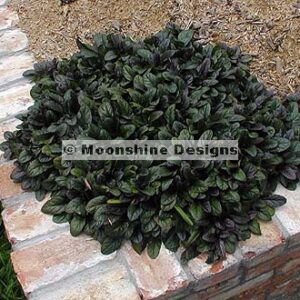
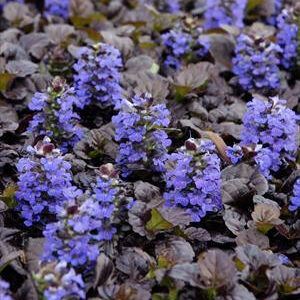
Excellent ground cover does best in partial to full shade. Reaching a height of 3-4 inches, this is right at home as a base plant for the shade garden plants or shrubs. Blue-violet flowers in spring on 4-6″ spikes are a favorite of bees. Forms a compact, dense mat that prevents weeds from poking through once established. 2-3″ oval shaped leaves form tight rosettes. Bronze foliage is most vivid in cooler temperatures of spring and fall. Stays ‘evergreen’ until temps drop below 15 degrees. Foliage may show more green than bronze in very dense shade or during very hot, humid times. Spreads by stolons, but is not invasive.
Ajuga, Bronze Beauty Plug Flat
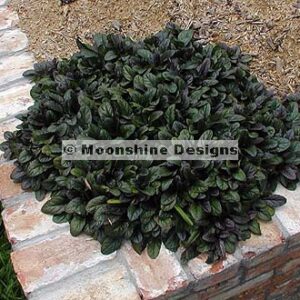
Excellent ground cover does best in partial to full shade. Reaching a height of 3-4 inches, this is right at home as a base plant for the shade garden plants or shrubs. Blue-violet flowers in spring on 4-6″ spikes are a favorite of bees. Forms a compact, dense mat that prevents weeds from poking through once established. 2-3″ oval shaped leaves form tight rosettes. Bronze foliage is most vivid in cooler temperatures of spring and fall. Stays ‘evergreen’ until temps drop below 15 degrees. Foliage may show more green than bronze in very dense shade or during very hot, humid times. Spreads by stolons, but is not invasive.
Ajuga, Burgundy Glow
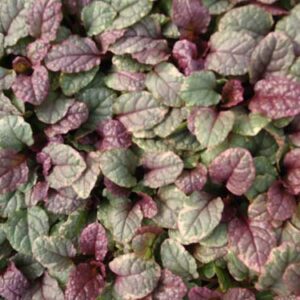
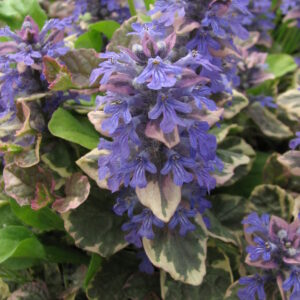
This more delicate Ajuga has a trailing habit, pretty variegated leaves, and blue panicles. Blooming is scattered in fall and summer, but profuse in spring. The younger leaves are an intense pink, especially in cool temperatures. A hardy, versatile foliage plant for landscapes, beds, and containers.
Deer-resistant
Exposure
Plant in sun or partial shade
Height
3-6″
Spacing
10-14″
Ajuga, Burgundy Glow Plug Flat
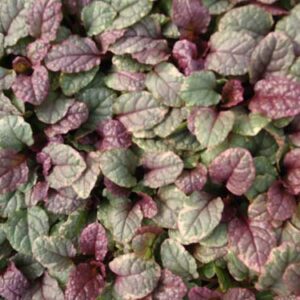
This more delicate Ajuga has a trailing habit, pretty variegated leaves, and blue panicles. Blooming is scattered in fall and summer, but profuse in spring. The younger leaves are an intense pink, especially in cool temperatures. A hardy, versatile foliage plant for landscapes, beds, and containers.
Deer-resistant
Ajuga, Caitlan’s Giant
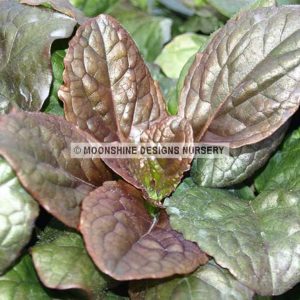
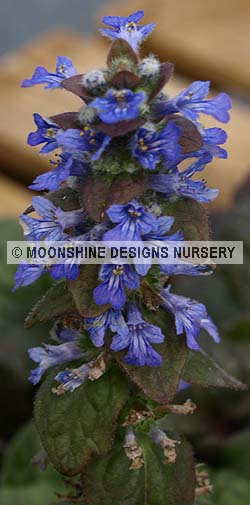
Popular as a dependable evergreen ground cover for shade and sun in most areas of the USA. ‘Caitlin’s Giant’ is a larger leafed ajuga with purple and green foliage with a ruffled edge. It is more tolerant of soil types than normal ajuga, and is actually quite drought tolerant once established. It performs equally well in sun or shade, and is a vigorous spreader, choking out weeds. Blue flower spikes appear in April through May. The plant grows 8- 10 inches tall and spreads up to 3 feet. It makes an excellent groundcover in shade or sun, but will not tolerate foot traffic well. Use stepping stones for pathways. Flowers are attractive to butterflies and hummingbirds.
Ajuga, Caitlin’s Giant Plug Flat
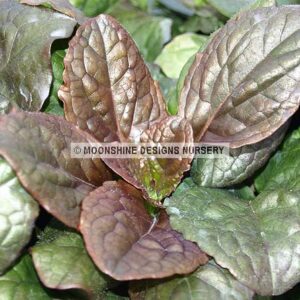
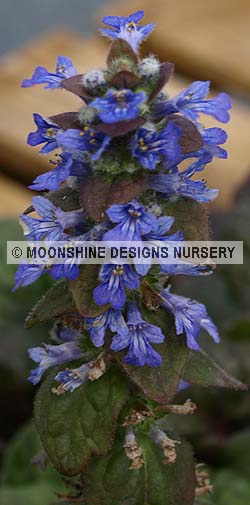
Popular as a dependable evergreen ground cover for shade and sun in most areas of the USA. ‘Caitlin’s Giant’ is a larger leafed ajuga with purple and green foliage with a ruffled edge. It is more tolerant of soil types than normal ajuga, and is actually quite drought tolerant once established. It performs equally well in sun or shade, and is a vigorous spreader, choking out weeds. Blue flower spikes appear in April through May. The plant grows 8- 10 inches tall and spreads up to 3 feet. It makes an excellent groundcover in shade or sun, but will not tolerate foot traffic well. Use stepping stones for pathways. Flowers are attractive to butterflies and hummingbirds.
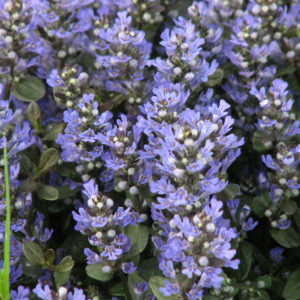
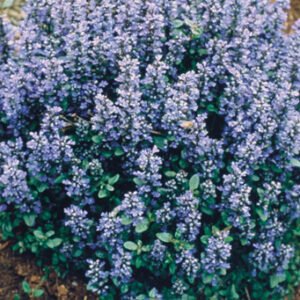
Ajuga, Chocolate Chip
Unusual, spreading miniature chocolate chip-sized foliage with shimmering lacy blue flowers. A true dwarf variety. Excellent ground cover and right at home trailing over the edge of containers.
Zones 3-11
Full sun to partial shade
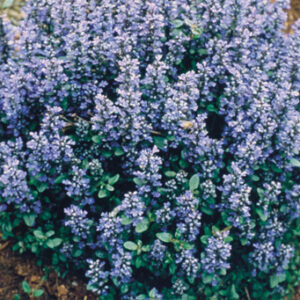
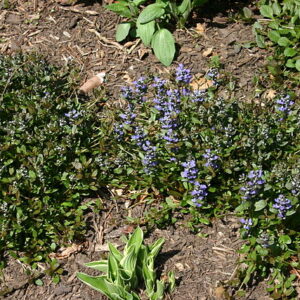
Ajuga, Chocolate Chip Plug Flat
Unusual, spreading miniature chocolate chip-sized foliage with shimmering lacy blue flowers. A true dwarf variety. Excellent ground cover and right at home trailing over the edge of containers.The plant grows 8- 10 inches tall and spreads up to 3 feet. It makes an excellent groundcover in shade or sun, but will not tolerate foot traffic well. Use stepping stones for pathways. Flowers are attractive to butterflies and hummingbirds.
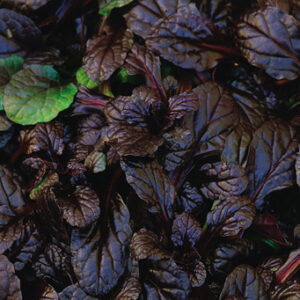

Ajuga, Mahogany
Deep, rich mahogany leaves and blue flowers in spring; tolerates deep shade and bad conditions
Exposure: Plant in sun or shade
Height: 3-6″
Spacing: 12-18″
Hardy Temp -28°F (-33°C) Zones 3-9
Uses: This robust and hardy Ajuga looks great in the landscape, beds and containers
Features: Deep, rich mahogany leaves and blue flowers in spring; tolerates deep shade and bad conditions
Growing Tips
Fast growing plants spread by underground stems to create a great groundcover. Divide clumps when plantings get over crowded. Remove spent flowers, shears or even mowing on a high setting can quickly take care of the old flowers.
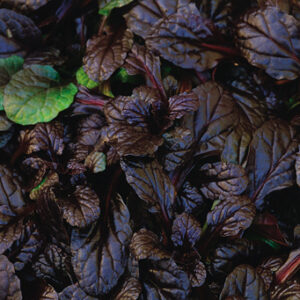
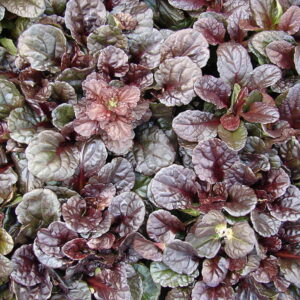
Ajuga, Mahogany Plug Flat
Deep, rich mahogany leaves and blue flowers in spring; tolerates deep shade and bad conditions
Exposure: Plant in sun or shade
Height: 3-6″
Spacing: 12-18″
Uses: This robust and hardy Ajuga looks great in the landscape, beds and containers
Features: Deep, rich mahogany leaves and blue flowers in spring; tolerates deep shade and bad conditions
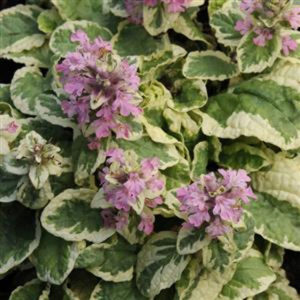
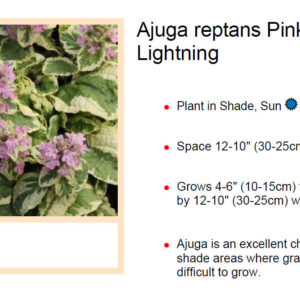
Ajuga, Pink Lightning
This selection quickly forms a low carpet of medium-sized, ruffled leaves, in an attractive mint green shade with creamy-white edging. Short spikes of pink flowers are an added bonus in mid to late spring. Vigorous habit. Evergreen in most regions.
AVAILABLE BEGINNING JUNE 1, 2019
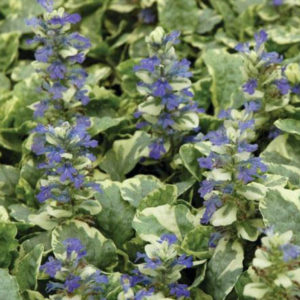
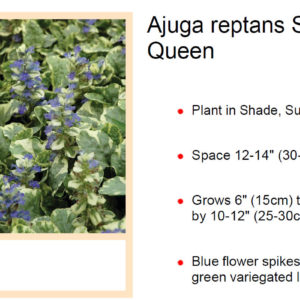
Ajuga, Silver Queen
Exposure: Shade, Sun
General Information: Blue flower spikes over white and green variegated leaves.
Growing Tips
Fast growing plants spread by underground stems to create a great groundcover. Divide clumps when plantings get over crowded. Remove spent flowers, shears or even mowing on a high setting can quickly take care of the old flowers.
Spacing
10-14″
Water: Medium
Maintenance: Low
Suggested Use: Ground Cover, Naturalize
Tolerate: Rabbit, Deer, Black Walnut
Ajuga, Silver Queen Plug Flat
Blue flower spikes over white and green variegated leaves.
Exposure: Plant in sun or shade
Height: 3-6″
Spacing: 12-18″
Uses: This robust and hardy Ajuga looks great in the landscape, beds and containers
Features: Deep, rich mahogany leaves and blue flowers in spring; tolerates deep shade and bad conditions
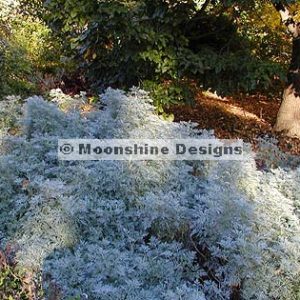
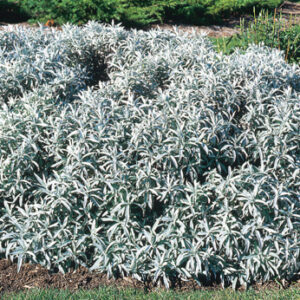
Artemesia, Silver Mound
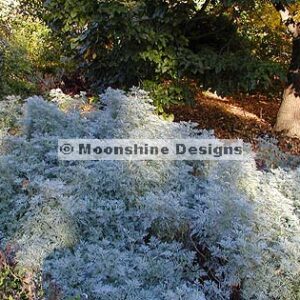
A low grower that¹s great in beds, borders, and containers. The mounding, self-branching habit makes this fine-cut silver foliage perennial an ideal companion for many flowering plants.
Zone 3-11
Full sun
10-15″ tall and wide
Artemisia, Silver Mound Plug Flat
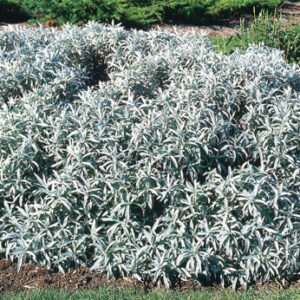
A low grower that¹s great in beds, borders, and containers. The mounding, self-branching habit makes this fine-cut silver foliage perennial an ideal companion for many flowering plants.
Zone 3-11
Full sun
10-15″ tall and wide
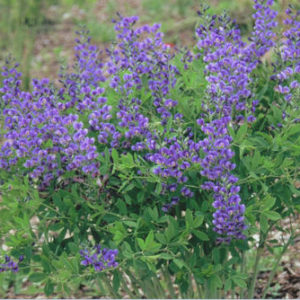
Baptisia Australis (Wild Blue Indigo)
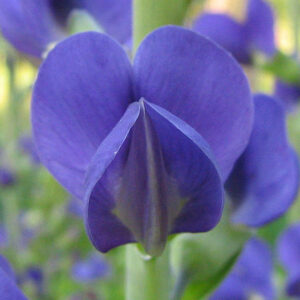
A native North American wildflower, False Indigo is an excellent choice for sunny gardens all over the continent. Plants form a tall, bushy clump of grey-green foliage, with long spikes of pea-like flowers, in shades of violet-blue. A good substitute for Lupines, in areas where they are difficult to grow. Makes an excellent cut flower, also attractive to butterflies. Drought tolerant, once established.
Baptisia australis fix nitrogen in the soil and its dried seed pods make very satisfactory rattles to amuse the little ones.
Full Sun 35-48″ Excellent cut flower. Seed pods make good decorations. Attracts butterflies.
Zones 2-9. Hardy perennial NATIVE flower.
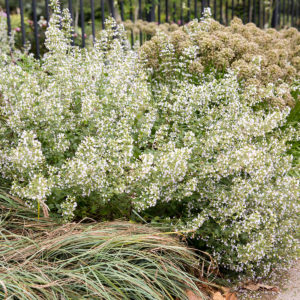
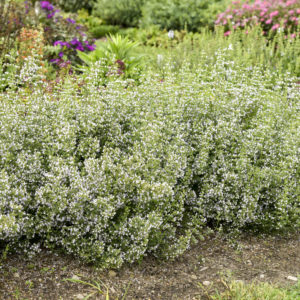
Calamintha Nepeta (Calamint)
Calamintha nepeta ssp. nepeta Common Name: Calamint, Lesser Catmint
2021 Perennial Plant Association Plant of the Year™
This sun-loving perennial is the perfect choice for attracting pollinators, since it blooms from early summer until frost. Tiny, white to light blue flowers cover the bushy habit. Since this is in the mint family, the leaves carry a mint scent. Perfect for rock garden enthusiasts and herb gardens. Use in the landscape as you would Nepeta (Catmint).
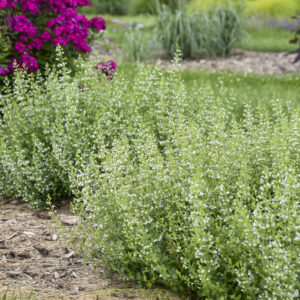
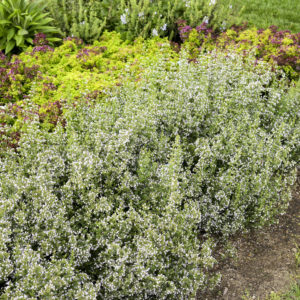
Calamintha Nepeta (Calamint) 70 ct. Plug Flat
Calamintha nepeta ssp. nepeta Common Name: Calamint, Lesser Catmint
2021 Perennial Plant Association Plant of the Year™
This sun-loving perennial is the perfect choice for attracting pollinators, since it blooms from early summer until frost. Tiny, white to light blue flowers cover the bushy habit. Since this is in the mint family, the leaves carry a mint scent. Perfect for rock garden enthusiasts and herb gardens. Use in the landscape as you would Nepeta (Catmint).
Catmint, ‘Purrsian Blue’ PP24788
Photos courtesy of Walters Gardens, Inc.
Nepeta faassenii ‘Purrsian Blue’ PP24788
Common Name: Catmint,
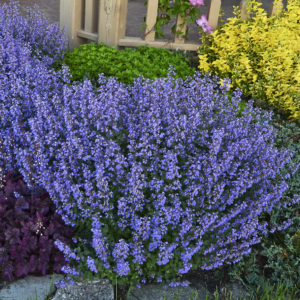
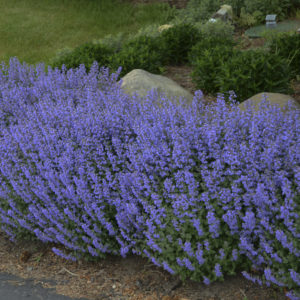
Like ‘Cat’s Meow’, this selection shares an improved tidy habit, though it is a bit smaller and more compact in size overall. In its first year, ‘Purrsian Blue’ forms a small, perfectly rounded, densely branched clump of tiny, green leaves. In year two, the plant maintains its compact mounding habit but nearly doubles its spread to just over two feet across.
This is a very floriferous selection whose flower power is amplified by its having its flowers spaced closely together on the stems. Periwinkle blue flowers are coddled by dark purple calyxes just above the aromatic foliage from early summer into early fall.
‘Purrisan Blue’ has everything today’s gardeners are looking for: a low maintenance, drought tolerant, deer resistant, long blooming perennial that looks great all season.
When Nepeta’s stems are broken, they release an aroma into the air that tends to attract cats, thus its common name, Catmint.
Height: 14.0-18.0 Inches
Spread: 18.0-30.0 Inches
Hardiness Zones: 3,4,5,6,7,8
Flower Color: Purple-blue shades
Foliage Color: Green shades
Sunlight: Full Sun (> 6 hrs. Direct Sun)
Water Requirements: Low Water Needs Average Water Needs
Soil Quality: Poor Soil Quality Average Soil Quality
Soil Chemistry: Neutral Soil (pH = 7.0)Alkaline Soil (pH > 7.0)
Bloomtime: Early Summer, Midsummer, Late Summer, Early Fall. Long Blooming
Attracts Wings: Attracts Butterflies, Hummingbirds, Bee Friendly
Critter Resistant: Deer Resistant Rabbit Resistant
Growth Rate: Medium
Grown and shipped in 3-1/2″ Perennial Pots.
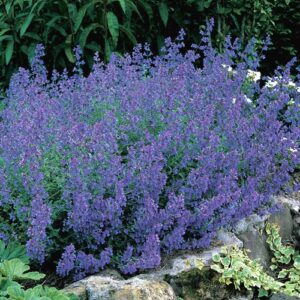
Catmint, Blue Carpet
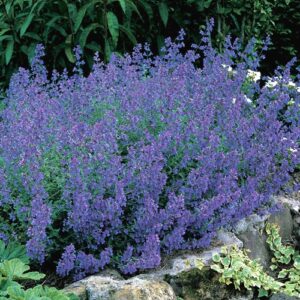
In late spring, plants produce 6-8 inch flowering spikes with an abundance of 2-lipped, tubular lavender-blue flowers over an extended time making this plant a useful addition to the sunny border. The small crinkly green-grey leaves are short growing, aromatic and lightly toothed.
Catmint, Blue Carpet Plug Flat
Profuse blue blooms on spiky stems.
Soft, crinkled, gray-green leaves on a short, mounding plant.
Good in containers, for borders, and the perennial herb garden. Very good choice for a tough, perennial ground cover!
Contains nepetalactone, the active ingredient in catnip that drives cats nuts..
Medicinal: In tea for nervous tension, sleeplessness. Catmint tea will put you to sleep in short order. Do not take this if operating a car or machinery!
Sun to Part Shade. 8-10″.
Zones 4-8. Hardy perennial herb.
Catmint, Border Ballet Plug Flat
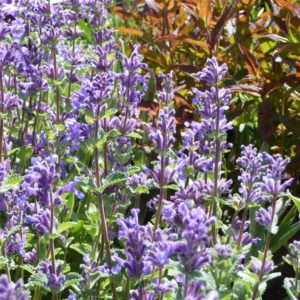
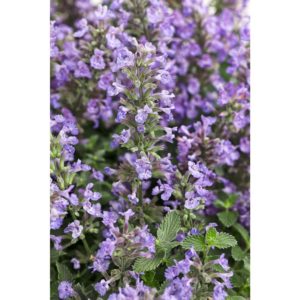
Nepeta (Catmint) grandiflora Border Ballet
Height: 16 inches
Zone: 4
Caucausus Catmint, lush violet purple flowers, dark green leaf, great shape with no staking, wonderful scent
A striking Catmint with flower stalks of Blue and Whitish Pink flowers that attract the bees and butterflies to dance in the garden. It’s a perennial that flowers in the first year and has a long growing season. Aromatic lush foliage, requiring very little maintenance.
Catmint, Cat’s Meow PPAF CPBRAF
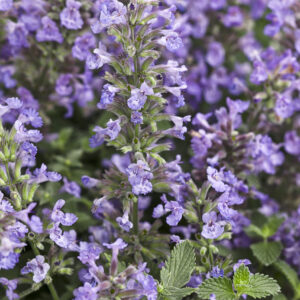
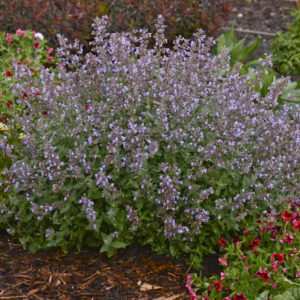
Truly the “cat’s meow”, the best Catmint we’ve seen yet! Unlike most Nepetas that have a bit of a wild, unkempt look, this first class selection keeps its tidy, dense, rounded shape all season long.
Its small, grey-green, aromatic leaves are topped with well-branched stems carrying spikes of sky blue flowers with purple calyxes from early summer into early fall.
Catmint, Cat’s Pajamas USPPAF, PBRAF
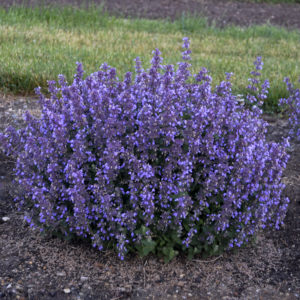
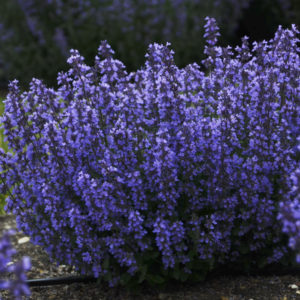
A long blooming perennial that’s perfect in small areas of the landscape. Indigo blue flowers are produced all the way from the soil to the tips, providing an intense splash of color when it’s in bloom
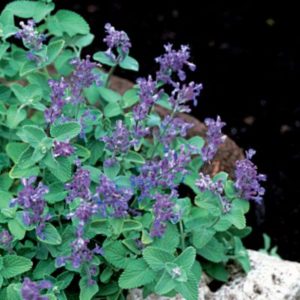
Catmint, Felix
12” tall mounding to 24” wide, compact, highly branched growth…3-4” flower spikes of lavender blue blooms all summer. Shearing after the first bloom speeds the process. Full sun, well drained soils are best, pots, rock garden…deer resistant. Great bee plant!
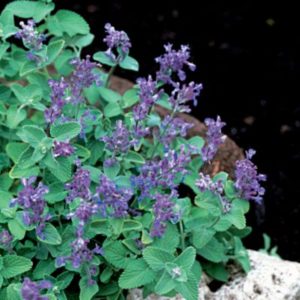
Catmint, Felix Plug Flat
Profuse blue blooms on spiky stems.
Soft, crinkled, gray-green leaves on a short, mounding plant.
Good in containers, for borders, and the perennial herb garden. Very good choice for a tough, perennial ground cover!
Contains nepetalactone, the active ingredient in catnip that drives cats nuts..
Medicinal: In tea for nervous tension, sleeplessness. Catmint tea will put you to sleep in short order. Do not take this if operating a car or machinery!
Sun to Part Shade. 8-10″.
Zones 4-8. Hardy perennial herb.
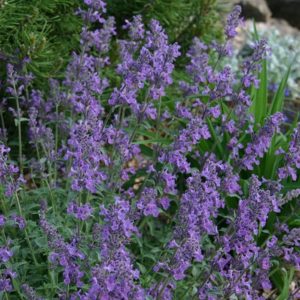
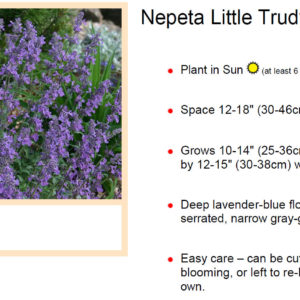
Catmint, Little Trudy®
Scientific Name: Nepeta x faassenii
Common Name: Catmint
Hardiness Zone: 4a – 9b
Hardiness Degree: -30°F (-34.4°C)
Blooming Season: Spring, Late Spring, Summer, Late Summer, Autumn
Plant Habit: Mounded
Characteristics: Rabbit Resistant, Colorful/Attractive Foliage, Scented Foliage, Heat Tolerant, Low Maintenance, Frost Tolerant, Deer Resistant, Drought Tolerant, Attracts Bees, Attracts Butterflies
Water: Light
Fertilize: None or when needed only
Spacing: 12 – 18″ (30 – 46cm)
Height: 10 – 14″ (25 – 36cm)
Width: 12 – 15″ (30 – 38cm)
Exposure: Sun
General Information: Deep lavender-blue flowers and serrated, narrow gray-green leaves.
Grower Information:
Deep lavender-blue flowers and serrated, narrow, gray-green leaves.
‘Psfike’
Protection Information: PP18,904
LITTLE TRUDY is a U.S. registered trademark of Plant Select.
Grown and shipped in 3-1/2″ Perennial Pots.
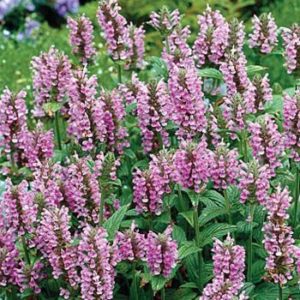
Catmint, Pink Cat
Pink Cat is an early blooming and mounding variety of Catmint that is not commonly found. This type is somewhat shorter and bushier that common Catmint. It forms fragrant pink spikes that will attract hummingbirds, butterflies and bees.
Pink Cat works well in containers as well as in your perennial border. Compact, heat tolerant, and easy to grow with aromatic leaves.
Use as a great general ground cover, accent plant, pathway edger, or rock garden specimen. (not for foot traffic)
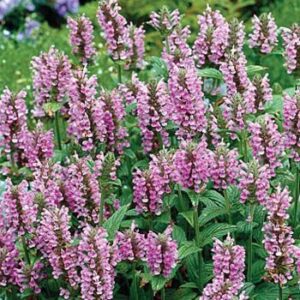
Catmint, Pink Cat Plug Flat
Pink Cat is an early blooming and mounding variety of Catmint that is not commonly found. This type is somewhat shorter and bushier that common Catmint. It forms fragrant pink spikes that will attract hummingbirds, butterflies and bees.
Pink Cat works well in containers as well as in your perennial border. Compact, heat tolerant, and easy to grow with aromatic leaves.
Use as a great general ground cover, accent plant, pathway edger, or rock garden specimen. (not for foot traffic)
Catmint needs good drainage and kept too wet, will develop crown rot. Shearing Catmint plant after blooming will encourage more branching and repeated flushes of flowers.
Zones 4-8. Hardy perennial herb.
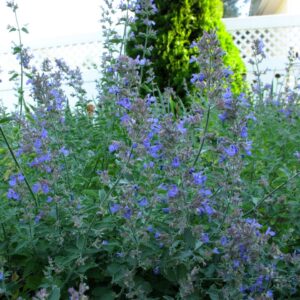

Catmint, Walker’s Low
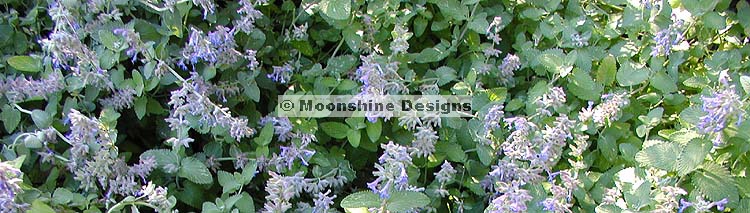
Deep lavender-blue flowers and it is one of the most vividly colored catmints. Blooms from June to September.
Soft, crinkled, gray-green leaves on a short, mounding plant.
Good in containers, for borders, and the perennial herb garden. Very good choice for a tough, perennial ground cover!
Contains nepetalactone, the active ingredient in catnip that drives cats nuts..
Medicinal: In tea for nervous tension, sleeplessness. Catmint tea will put you to sleep in short order. Do not take this if operating a car or machinery!
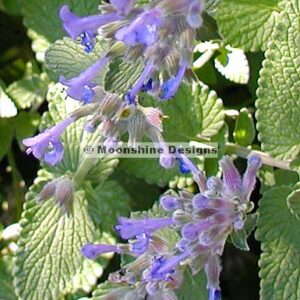
Catmint, Walker’s Low Plug Flat
TOP SELLER! Deep lavender-blue flowers and it is one of the most vividly colored catmints. Blooms from June to September.
Soft, crinkled, gray-green leaves on a short, mounding plant.
Good in containers, for borders, and the perennial herb garden. Very good choice for a tough, perennial ground cover!
Contains nepetalactone, the active ingredient in catnip that drives cats nuts..
Medicinal: In tea for nervous tension, sleeplessness. Catmint tea will put you to sleep in short order. Do not take this if operating a car or machinery!
Sun to Part Shade. 10″ height and 12-14″ spread. Zones 4-8. Hardy perennial herb.
Catnip-Nepeta cataria
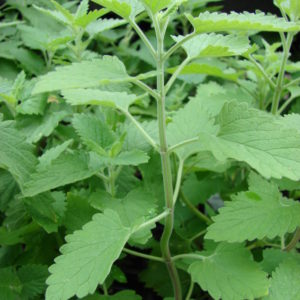
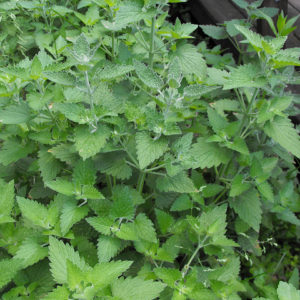
Catnip has a well earned reputation for sending cats into states euphoria. Catnip, a member of the mint family, is a harmless “high” for felines. Although many cats will eat it, scientists say they’re reacting to the smell rather than the taste. Felines bite, chew, rub against, and roll in catnip to release the volatile oil trapped in the leaves. About 80% of adult cats react to this irresistible, intoxicating, analgesic soporific. The tendency to like or ignore catnip is inherited, and it’s true that some cats are immune to its influence.
Chamomile, Roman
Chamomile has been taken for centuries as a digestive tonic. It reduces inflammation, stimulates the appetite and aids insomnia. Acts as a diuretic and nerve tonic. Helpful for colitis, diverticulosis, fever, headaches and pain. Good for menstrual cramps. Useful as a mouthwash for minor mouth and gum infections.
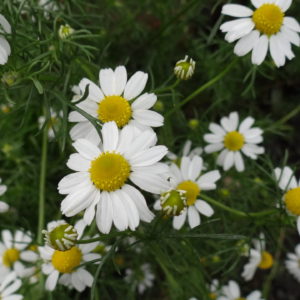
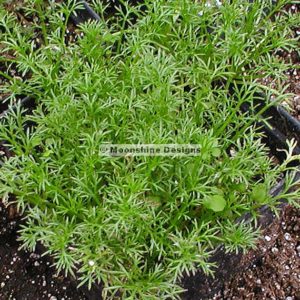
This perennial form is also known as Roman chamomile. Excellent groundcover since it grows only 4 to 12 inches in height. The feathery foliage has an apple scent. Blooms are white, daisy-like flowers with down-turned petals.
Roman chamomile foliage can be chopped and stirred into butter or sour cream that is used to top baked potatoes.
Chives, Garlic or Onion, Plug Flat
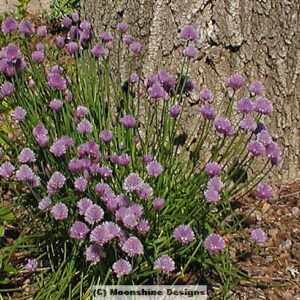
The subtle and pleasant taste of chives make them an extremely popular food addition! Fresh chives, finely chopped, are sprinkled over soups, baked potatoes, stews, and several sauces. In mid-Summer, they will also put on quite a show with their abundant, fragrant flowers. Certainly just as well at home in the flower garden as the herb garden. Perfect year around windowsill plant, too!
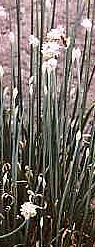
In Chinese cooking, the flat leaves of garlic chives are often used the same way as we use regular chives in our cooking:., sprinkled over foods for extra fragrance and decoration. Garlic chives can be substituted by regular chives, but since regular chives have a weaker flavor, it is worthwhile to grow both so you will always have an ample supply of either one for what ever the recipe calls for.