
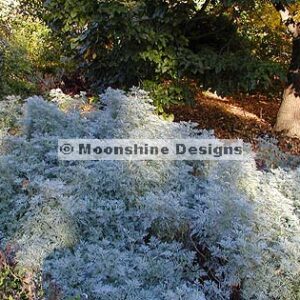
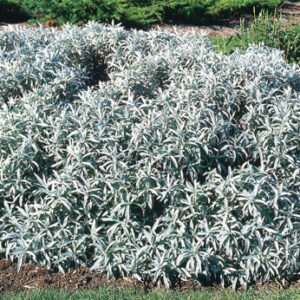
Artemisia, Silver Mound Plug Flat
A low grower that¹s great in beds, borders, and containers. The mounding, self-branching habit makes this fine-cut silver foliage perennial an ideal companion for many flowering plants.
Zone 3-11
Full sun
10-15″ tall and wide
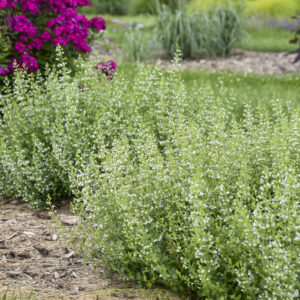
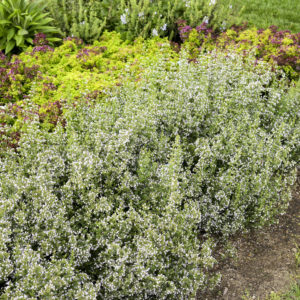
Calamintha Nepeta (Calamint) 70 ct. Plug Flat
Calamintha nepeta ssp. nepeta Common Name: Calamint, Lesser Catmint
2021 Perennial Plant Association Plant of the Year™
This sun-loving perennial is the perfect choice for attracting pollinators, since it blooms from early summer until frost. Tiny, white to light blue flowers cover the bushy habit. Since this is in the mint family, the leaves carry a mint scent. Perfect for rock garden enthusiasts and herb gardens. Use in the landscape as you would Nepeta (Catmint).
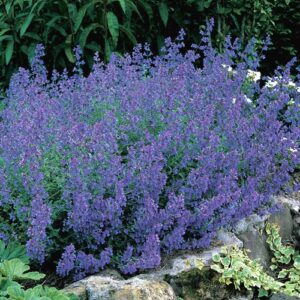
Catmint, Blue Carpet Plug Flat
Profuse blue blooms on spiky stems.
Soft, crinkled, gray-green leaves on a short, mounding plant.
Good in containers, for borders, and the perennial herb garden. Very good choice for a tough, perennial ground cover!
Contains nepetalactone, the active ingredient in catnip that drives cats nuts..
Medicinal: In tea for nervous tension, sleeplessness. Catmint tea will put you to sleep in short order. Do not take this if operating a car or machinery!
Sun to Part Shade. 8-10″.
Zones 4-8. Hardy perennial herb.
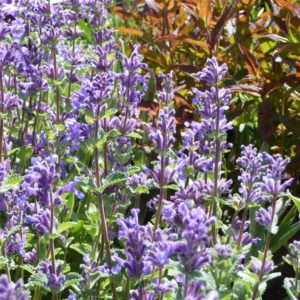
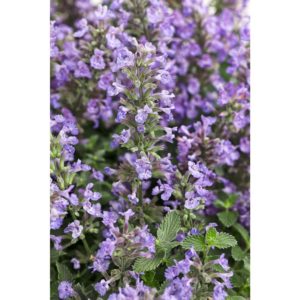
Catmint, Border Ballet Plug Flat
Nepeta (Catmint) grandiflora Border Ballet
Height: 16 inches
Zone: 4
Caucausus Catmint, lush violet purple flowers, dark green leaf, great shape with no staking, wonderful scent
A striking Catmint with flower stalks of Blue and Whitish Pink flowers that attract the bees and butterflies to dance in the garden. It’s a perennial that flowers in the first year and has a long growing season. Aromatic lush foliage, requiring very little maintenance.
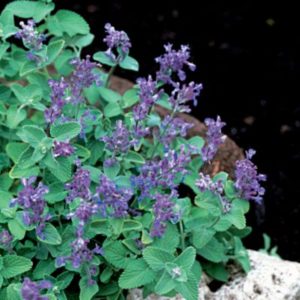
Catmint, Felix Plug Flat
Profuse blue blooms on spiky stems.
Soft, crinkled, gray-green leaves on a short, mounding plant.
Good in containers, for borders, and the perennial herb garden. Very good choice for a tough, perennial ground cover!
Contains nepetalactone, the active ingredient in catnip that drives cats nuts..
Medicinal: In tea for nervous tension, sleeplessness. Catmint tea will put you to sleep in short order. Do not take this if operating a car or machinery!
Sun to Part Shade. 8-10″.
Zones 4-8. Hardy perennial herb.
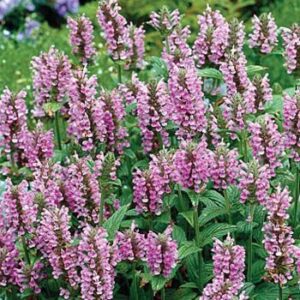
Catmint, Pink Cat Plug Flat
Pink Cat is an early blooming and mounding variety of Catmint that is not commonly found. This type is somewhat shorter and bushier that common Catmint. It forms fragrant pink spikes that will attract hummingbirds, butterflies and bees.
Pink Cat works well in containers as well as in your perennial border. Compact, heat tolerant, and easy to grow with aromatic leaves.
Use as a great general ground cover, accent plant, pathway edger, or rock garden specimen. (not for foot traffic)
Catmint needs good drainage and kept too wet, will develop crown rot. Shearing Catmint plant after blooming will encourage more branching and repeated flushes of flowers.
Zones 4-8. Hardy perennial herb.
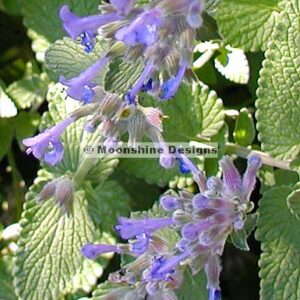
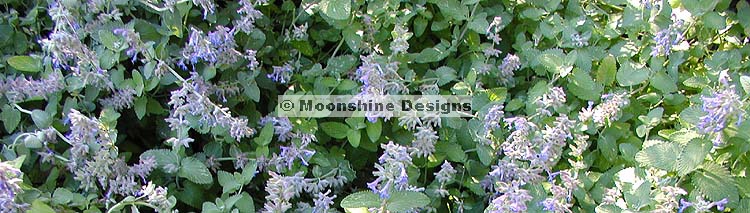
Catmint, Walker’s Low Plug Flat
TOP SELLER! Deep lavender-blue flowers and it is one of the most vividly colored catmints. Blooms from June to September.
Soft, crinkled, gray-green leaves on a short, mounding plant.
Good in containers, for borders, and the perennial herb garden. Very good choice for a tough, perennial ground cover!
Contains nepetalactone, the active ingredient in catnip that drives cats nuts..
Medicinal: In tea for nervous tension, sleeplessness. Catmint tea will put you to sleep in short order. Do not take this if operating a car or machinery!
Sun to Part Shade. 10″ height and 12-14″ spread. Zones 4-8. Hardy perennial herb.
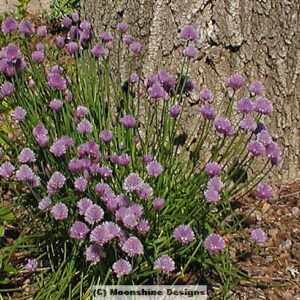
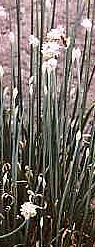
Chives, Garlic or Onion, Plug Flat
The subtle and pleasant taste of chives make them an extremely popular food addition! Fresh chives, finely chopped, are sprinkled over soups, baked potatoes, stews, and several sauces. In mid-Summer, they will also put on quite a show with their abundant, fragrant flowers. Certainly just as well at home in the flower garden as the herb garden. Perfect year around windowsill plant, too!
In Chinese cooking, the flat leaves of garlic chives are often used the same way as we use regular chives in our cooking:., sprinkled over foods for extra fragrance and decoration. Garlic chives can be substituted by regular chives, but since regular chives have a weaker flavor, it is worthwhile to grow both so you will always have an ample supply of either one for what ever the recipe calls for.
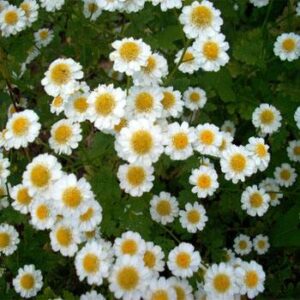
Feverfew Plug Flat
Feverfew has many uses, including preventing migraine headaches in some people.
Feverfew is also said to be effective for fever, irregular menstrual periods, arthritis, a skin disorder called psoriasis, allergies, asthma, ringing in the ears (tinnitus), dizziness, and nausea and vomiting.
Some people use feverfew for difficulty getting pregnant or fathering a child (infertility). It is also used for “tired blood” (anemia), cancer, common cold, earache, liver disease, prevention of miscarriage, muscular tension, bone disorders, swollen feet, diarrhea, upset stomach and intestinal gas. Feverfew is sometimes applied directly to the gums for toothaches or to the skin to kill germs.
Feverfew is a medicinal herb with a long history of use. The leaves are dried and used as an herbal remedy for migraine headaches. The Feverfew herb contains parthenolide which can relieve mild spasms and is an anti-inflammatory. Some people take it to relieve the pain of rheumatoid arthritis.
We make no claims as to the effectiveness of any herbal treatment and the above text is for information only.
As an ornamental, it is a hardy perennial with deeply cut leaves and lovely daisy-like blooms that measure 3/4 inch across. It is native to Southern Europe, but can be found in many areas of the world. A synonymous botanical name is Tanacetum Parthenium.
Hardy Zones 5-8
Will tolerate even the poorest soils provided it is not soggy.
Best in full sun.
Height: 36″. Space plants 24″.
Bloom time: early to mid-late summer. Blooms can easily be cut and dried.
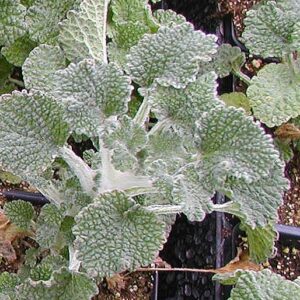
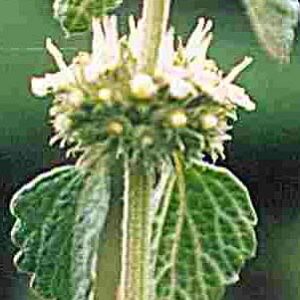
Horehound Plug Flat
The key ingredient for making old-fashioned Horehound candy.
This tough Perennial herb has attractive, fuzzy gray foliage. Zones 4-9
Most used for flavoring honey and candy.
Has a rich history in medicine. Horehound candy is also used to treat coughs, sore throat.
Will tolerate even the poorest soils provided it is not soggy.
Best in full sun.
Height: 36″. Space plants 24″.
Bloom time: early to mid-late summer.
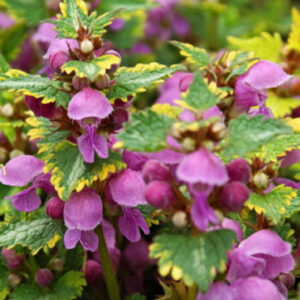
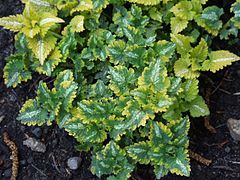
Lamium, Anne Greenaway Plug Flat
Common name is Spotted Dead Nettle
Deer-resistant Self-cleaning, no deadheading necessary.
An exquisite blend of chartreuse, silver, medium-green, and mint green embellishes the foliage of L. ‘Anne Greenaway’. With such fantastic coloring, this groundcover is breathtaking even when not in bloom. Mauve flowers add to the ornamental value from late spring into early summer, then bloom sporadically until frost. Evergreen in zones 7 and above.
Exposure: Plant in sun or shade Height 8-12″ Spacing 10-14″ Hardy Temp: -30°F (-34°C) Zones 4-9 Perennial Uses: Plant alone or in combinations in all container types and landscapes. Excellent groundcover.
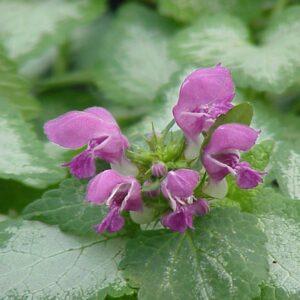
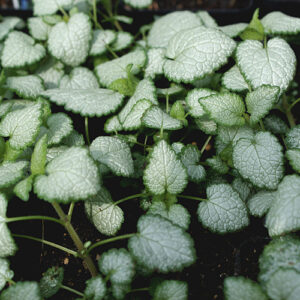
Lamium, Beacon Silver Plug Flat
Common name is Spotted Dead Nettle
Deer-resistant Self-cleaning, no deadheading necessary.
This popular variety has silvery leaves with narrow, green margins which provide a lovely backdrop for the lavender-to-pink, hooded flowers produced from midspring to early summer. Lamium makes an excellent, weed-smothering groundcover and is also a good mask for dying bulb foliage.
Evergreen in zones 7 and above.
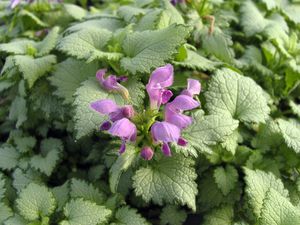

Lamium, Ghost Plug Flat
Common name is Spotted Dead Nettle
Deer-resistant Self-cleaning, no deadheading necessary.
This very large variety dwarfs other lamiums by comparison! Standing about a foot tall, the all-silver leaves create a billowy cloud of silver in the garden. The leaves measure a full 1.5 inches long compared to 1/2 to 3/4 inches long on other varieties.
Clusters of large, bright orchid purple flowers top the clump of silver foliage in mid to late spring. The contrast between the flowers and foliage is striking and often stops passersby in their tracks! Blooms from late April thru August.
Lamium makes an excellent, weed-smothering groundcover and is also a good mask for dying bulb foliage.
Evergreen in zones 7 and above.
Exposure: Plant in sun or shade
Height 10-16″ Spacing 10-14″
Hardy Temp: -30°F (-34°C) Zones 4-9 Perennial
Uses: Plant alone or in combinations in all container types and landscapes. Excellent groundcover.
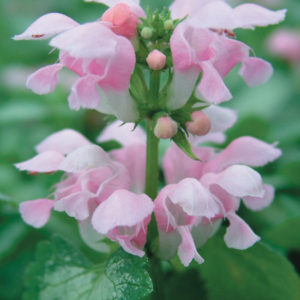
Lamium, Pink Pewter Plug Flat
Common name is Spotted Dead Nettle
Deer-resistant Self-cleaning, no deadheading necessary.
Exposure: Plant in sun or shade
Height 8-12″ Spacing 10-14″
Hardy Temp: -30°F (-34°C) Zones 4-9 Perennial
Uses: Plant alone or in combinations in all container types and landscapes
Features: A frothy confection of silver and green foliage with pink flowers; heat tolerant
Lamium makes an excellent, weed-smothering groundcover and is also a good mask for dying bulb foliage.
Evergreen in zones 7 and above. Excellent groundcover.
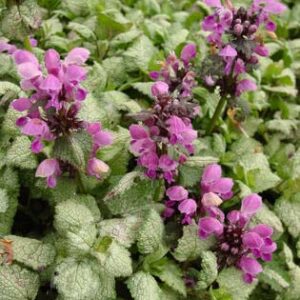
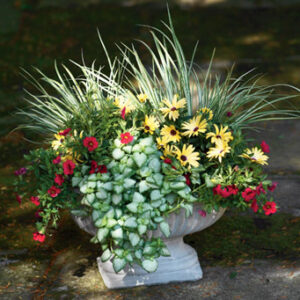
Lamium, Red Nancy Plug Flat
Common name is Spotted Dead Nettle
Deer-resistant Self-cleaning, no deadheading necessary.
Exposure: Plant in sun or shade
Height 8-12″ Spacing 10-14″
Hardy Temp: -30°F (-34°C) Zones 4-9 Perennial
Uses: Plant alone or in combinations in all container types and landscapes
Features: A frothy confection of silver and green foliage with purple-red flowers; heat tolerant (Our note: Blooms are more of a violet color than red)
Lamium makes an excellent, weed-smothering groundcover and is also a good mask for dying bulb foliage.
Evergreen in zones 7 and above. Excellent groundcover.
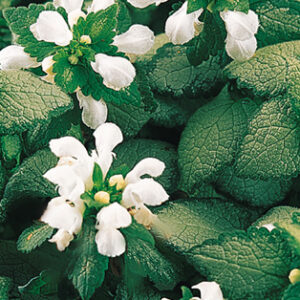
Lamium, White Nancy Plug Flat
Common name is Spotted Dead Nettle
Deer-resistant Self-cleaning, no deadheading necessary.
Exposure: Plant in sun or shade
Height 8-12″ Spacing 10-14″
Hardy Temp: -30°F (-34°C) Zones 4-9 Perennial
Uses: Plant alone or in combinations in all container types and landscapes
Features: A frothy confection of silver and green foliage with white flowers; heat tolerant
Lamium makes an excellent, weed-smothering groundcover and is also a good mask for dying bulb foliage.
Evergreen in zones 7 and above. Excellent groundcover.
Lavender, Hidcote Superior Plug Flat
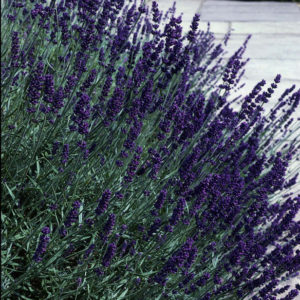
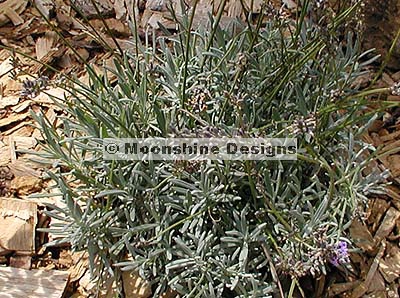
The classic form complete with wonderful fragrance! A necessity in the garden or landscape! This is the true lavender! Just brushing up against it will release its intense aroma! The foliage is silver-gray, and the flowers are deep violet-blue-colored. The leaves are evergreen and reach 2 in. long. Flowering occurs in summer, and the flowers are ¼–½ in. long, form interrupted spikes, and have an attractive fragrance. The leaves and the flowers are aromatic and have many uses.
Lavender, Lavender Lady Plug Flat
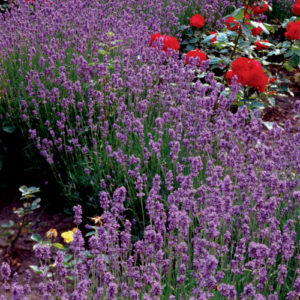
This AAS winner offers blue-green foliage on very uniform plants just 10 to 16 inches high! Lavender angustifolia is one of the richest in essential oils, meaning more fragrance power both fresh and dried. And this ‘Lady’ cultivar, an AAS winner, has a more uniform habit and it blooms in only 90 days from seed! Fresh flowers can be crystallized and used in candies and cakes; dried flowers are used in potpourris and sachets; oils are used in creams and perfumes. And these are only some of the more common uses – imagination can create endless more! An evergreen perennial, Lavender ‘Lady’ has a subtle blue-green coloring and sweet fragrance. Reaching 10 to 16 inches high and 10 inches wide, it boasts 2 1/2 inch, linear, downy leaves on strong stems. The leaves first open white, then turn a pale gray-blue-green color. Stalks of lavender flowers grow up to 12 inches tall above the foliage.
Lavender, Munstead Plug Flat
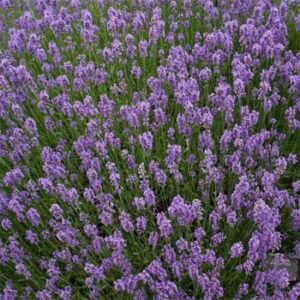
The classic form complete with wonderful fragrance! A necessity in the garden or landscape! This is the true lavender! Just brushing up against it will release its intense aroma! The foliage is silver-gray, and the flowers are deep violet-blue-colored. The leaves are evergreen and reach 2 in. long. Flowering occurs in summer, and the flowers are ¼–½ in. long, form interrupted spikes, and have an attractive fragrance. The leaves and the flowers are aromatic and have many uses. Compact grower makes it ideal for lining walkways, the back of the herb garden, or for growing among roses and taller companion plants. Deer don’t like it Zones 5-9 20-30″ High x 18″ Wide Optimal growing conditions: True lavender is soil and drought tolerant but performs best in well-drained soil under full sun. Drainage is the most important factor. Another thing useful to know: Growth can be slow and soft in heavy soils, and a hardiness problem may appear. In good conditions, the growth rate is moderate.
Lavender, Vera Plug Flat
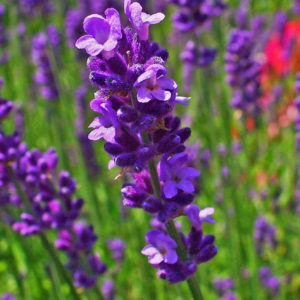
Lavandula angustifolia ‘vera’ Most common commercial grown variety This is the true lavender! Just brushing up against it will release its intense aroma! The foliage is silver-gray, and the flowers are deep violet-blue-colored. The leaves are evergreen and reach 2 in. long. Flowering occurs in summer, and the flowers are ¼–½ in. long, form interrupted spikes, and have an attractive fragrance. The leaves and the flowers are aromatic and have many uses. Compact grower makes it ideal for lining walkways, the back of the herb garden, or for growing among roses and taller companion plants. Deer don’t like it Zones 5-9 20-30″ High x 18″ Wide Optimal growing conditions: True lavender is soil and drought tolerant but performs best in well-drained soil under full sun. Drainage is the most important factor. Another thing useful to know: Growth can be slow and soft in heavy soils, and a hardiness problem may appear. In good conditions, the growth rate is moderate.
Lemon Balm Plug Flat
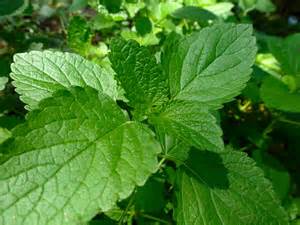
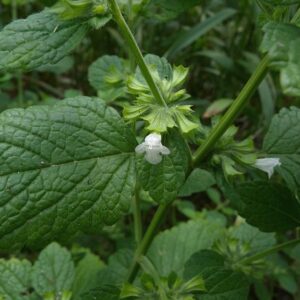
The key ingredient for making lemon balm tea.
This tough Perennial herb has a great lemon scent. Zones 4-9
Will tolerate even the poorest soils provided it is not soggy.
Best in full sun.
Height: 24″. Space plants 24″.
Bloom time: early to mid-late summer.
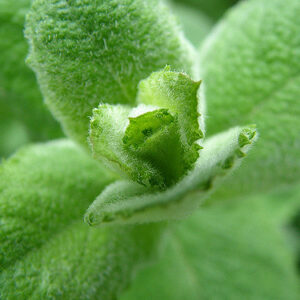
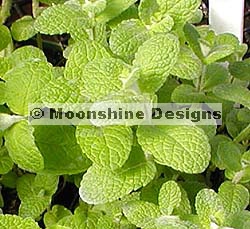
Mint, Apple Plug Flat
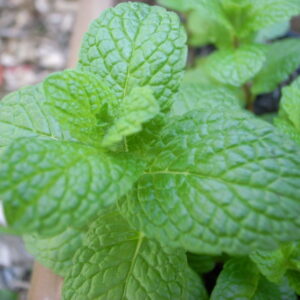
This hardy perennial is a very robust grower. Apple Mint has interesting light green leaves. They are somewhat hairy on the upper surface and downy underneath, with serrated edges. They can grow up to 3 feet high, but may be kept lower.
Grow Apple Mint in full sun to light shade. Feed them heavily in late summer to guarantee healthy growth the following spring. Apple Mint will survive in dry soil, but will do much better in moist, fertile ground. Cut back or mow down the Mint patch 2 or 3 times a year to encourage fresh growth. Cut the stems even with the ground and throw out the long, woody stems. Strip off and dry whole leaves for potpourris. Save the top 2 to 3 sets of leaves for fresh use and garnishes. Apple Mint’s fragrance may vary in strength; the mild apple flavor doesn’t sustain well in dried leaves.
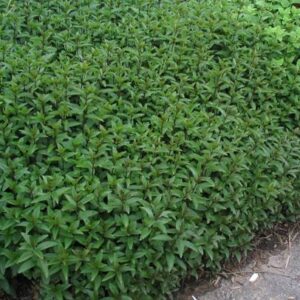
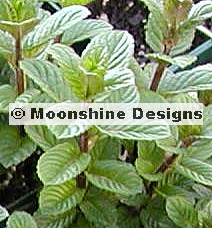
Mint, Spearmint, Kentucky Colonel Plug Flat
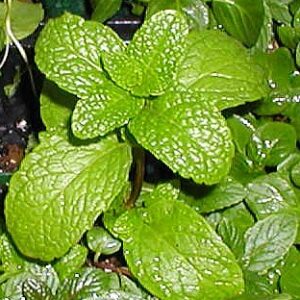
THE MOJITO MINT! Commercially grown for Mint Juleps, Mojitos, and spearmint flavoring. Large, dark green, slightly crinkly leaves. Kentucky Colonel is a reliably hardy, strongly flavored spearmint that is favored by many herb growers. OUR MOST POPULAR MINT!
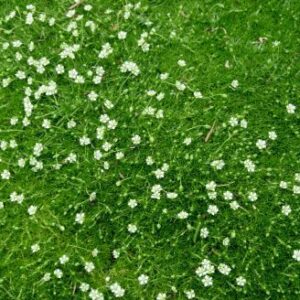
Moss, Irish “Crispy” Plug Flat
A variety of Irish Moss developed by Jelitto. Very compact and dense.
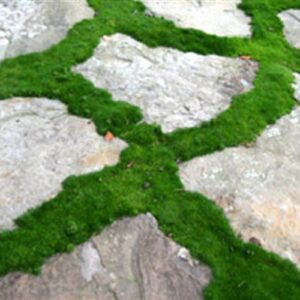
Excellent ground cover and also very good for use between flagstones in pathways. Tolerates light foot traffic, but not for a heavily used pathway. Nice choice for the rock garden, too.
Zones: 4 – 8
Height: 1 – 4 inches
Full to Partial Sun…………..Light shade in the south is a must
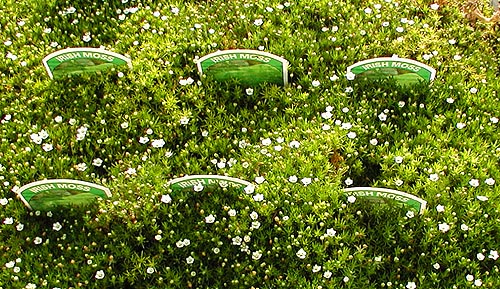
An evergreen ground cover. The mossy foliage grows just 1 – 3 inches tall and creates the effect of a moss-covered meadow.
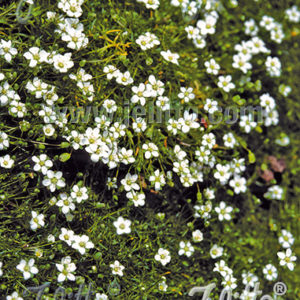
During early to midsummer when it blooms, it is covered with small white flowers.
Needs moisture retentive, gritty, well-drained soil. Will do poorly in wet, soggy ground.
Not a true moss, but these tiny plants resemble moss and are terrific planted around flagstones, in containers or used as a small scale ground cover.
Moss, Irish Plug Flat
Excellent ground cover and also very good for use between flagstones in pathways. Tolerates light foot traffic, but not for a heavily used pathway. Nice choice for the rock garden, too.
Zones: 4 – 8
Height: 1 – 4 inches
Full to Partial Sun…………..Light shade in the south is a must
An evergreen ground cover. The mossy foliage grows just 1 – 3 inches tall and creates the effect of a moss-covered meadow.
During early to midsummer when it blooms, it is covered with small white flowers.
Needs moisture retentive, gritty, well-drained soil. Will do poorly in wet, soggy ground.
Not a true moss, but these tiny plants resemble moss and are terrific planted around flagstones, in containers or used as a small scale ground cover.
Moss, Scotch Plug Flat
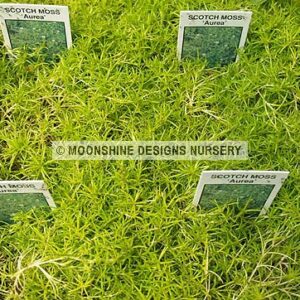
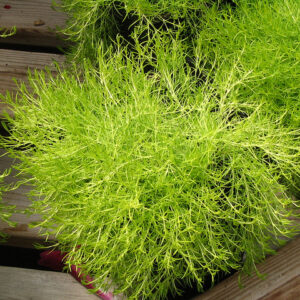
Excellent ground cover and also very good for use between flagstones in pathways. Tolerates light foot traffic, but not for a heavily used pathway. Nice choice for the rock garden, too.
Zones: 4 – 8
Height: 1 – 4 inches
Full to Partial Sun…………..Light shade in the south is a must
An evergreen ground cover. The mossy foliage grows just 1 – 3 inches tall and creates the effect of a moss-covered meadow.
During early to midsummer when it blooms, it is covered with small white flowers.
Needs moisture retentive, gritty, well-drained soil. Will do poorly in wet, soggy ground.
Not a true moss, but these tiny plants resemble moss and are terrific planted around flagstones, in containers or used as a small scale ground cover.
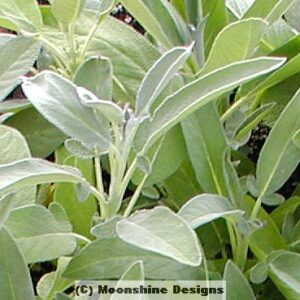
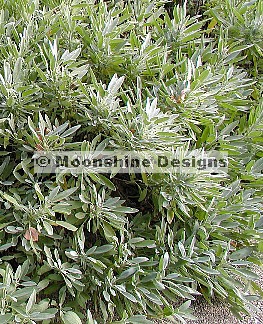
Sage, Garden Plug Flat
Hardy perennial. Zones 5-9 Days to Maturity: 80-90 days to harvest when started indoors from seed. Sun to Part Shade. 16-30″ height. Space 12″-18″. Edible flowers: garnish, cook in rice, egg or cheese dishes. Tough and hardy perennial herb.
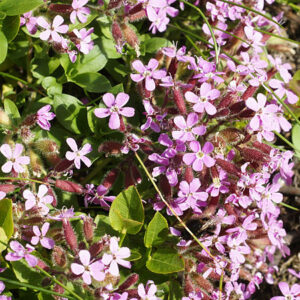
Saponaria (Rock Soapwort) Deep Pink Plug Flat
Low maintenance ground cover and rock garden perennial. Plants form a low mound of bright-green leaves, literally smothered by starry bright-deep-pink flowers in late spring. Easy to grow and drought tolerant, once established.
Also useful for edging and spilling over rock walls and out of containers. Not invasive. Plants can be easily divided, if desired, in early spring. Evergreen in all but the coldest zones. Deer resistant. Tough, but not for foot traffic.
Hardy Zones 2-9. May not remain evergreen in zones 2 & 3.
Height: 6-8 inches
Spread: 12-24 inches Sun
Exposure: Full Sun
Soil Type: Not fussy, but should be well drained.
Soil Moisture: Average to Dry
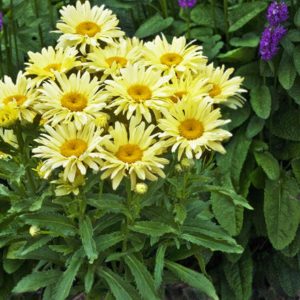

Shasta Daisy (Leucanthemum) Amazing Daisies™ ‘Banana Cream’
A superb selection with huge 4-5”, lemon yellow flowers which brighten to creamy white. Well-budded plants have an extra long bloom time in summer. A vigorous grower with disease resistant, dark green foliage. Nice in pots or in the garden. Zones 5-9
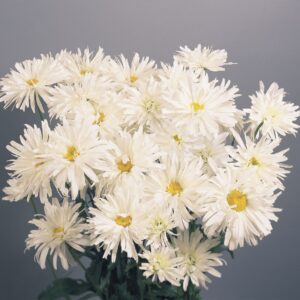
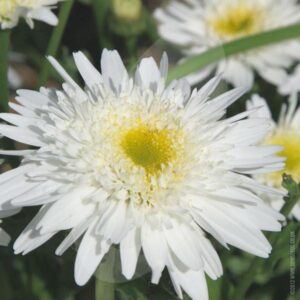
Shasta Daisy (Leucanthemum) Crazy Daisy
Common Name: Shasta daisy
‘Crazy Daisy’ is a Shasta daisy cultivar that typically grows 2-2.5’ tall. It is noted for its large double blooms (2.5” diameter) with frilly, twisted white rays and yellow center disks. Multiple flowers per stem. Coarsely-toothed, lance-shaped, medium green leaves (basal leaves to 12” long). Blooms most of the summer. Excellent and long-lasting fresh cut flower.
Zones 4-9
Shasta Daisy (Leucanthemum) Crazy Daisy Plug Flat
Common Name: Shasta daisy
‘Crazy Daisy’ is a Shasta daisy cultivar that typically grows 2-2.5’ tall. It is noted for its large double blooms (2.5” diameter) with frilly, twisted white rays and yellow center disks. Multiple flowers per stem. Coarsely-toothed, lance-shaped, medium green leaves (basal leaves to 12” long). Blooms most of the summer. Excellent and long-lasting fresh cut flower.
Zones 4-9

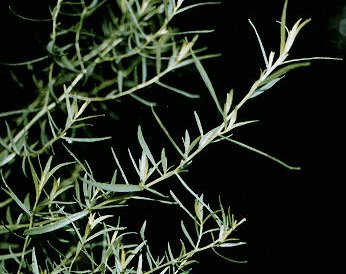
Tarragon, Russian (Artemisia dracunculoides Pursch) Plug Flat
The flavor of Russian Tarragon may not be so pronounced as its French counterpart but is it is a much more hardy plant that prefers poor soils and can cope with a bit of neglect. It produces lots of leaves, which can be used for a milder flavor.
Zones 5-10
72 count plug flat sold as 70.
Back orders may require 4-6 weeks, depending on season.
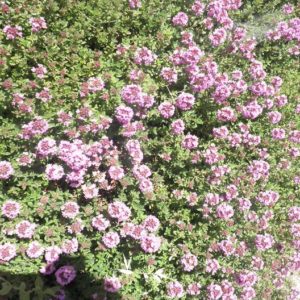
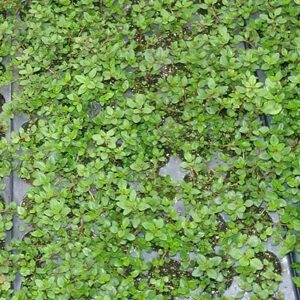
Thyme, Creeping, Broad Leaf Plug Flat
Broad-leaved Thyme
Thymus pulegioides
An extra-rugged, larger formed creeping variety. Also the fastest growing of the creeping Thymes.
Creeping Thyme is a native of northern Africa, Europe, and Asia, and has naturalized in North America. This fragrant, creeping plant has broad, dark green leaves and in June, produces heads of rose-purple flowers. A larger creeping type with a height of 4-8″ and highly fragrant if walked on. Withstands light foot traffic. Also known as “walk-on-me” thyme. Zones 4b (with protection)-10 Creeping varieties may seem tall in a plug flat since they have no where to go but on top of each other!
72 count plug flat sold as 70.
Back orders may require 4-6 weeks, depending on season.
IMPORTANT NOTE REGARDING THYME PLUG FLATS!!!
THIS IS A VERY HIGH DEMAND ITEM. FLATS MAY REQUIRE A MINIMUM LEAD TIME OF 4-6 WEEKS IF AVAILABILITY IS ZERO AND WE RECOMMEND THAT YOU ORDER AS EARLY AS POSSIBLE. LONGER LEADS MAY BE NECESSARY DURING PEAK SEASONS. FLATS SHIP 72 PLANTS PER FLAT, SOLD AS 70 OR 128 SOLD AS 125. FLAT GROUND SHIPMENTS LIMITED TO MARCH THROUGH JUNE AND SEPTEMBER THROUGH NOVEMBER. SUMMER ORDERS (JULY-AUGUST), MUST BE SHIPPED 2ND DAY OR NEXT DAY AIR. WE DO NOT RECOMMEND MID SUMMER OR MID WINTER SHIPMENTS OF FLATS UNLESS NEXT DAY OR 2ND DAY AIR. SHIPMENTS OF PLUGS SHIPPED USPS (US POSTAL SERVICE) ARE AT THE BUYER’S RISK! USPS SHIPMENTS ARE NOT INSURABLE! WILL CALLS ACCEPTED. PLEASE CALL FIRST. PICKUP IS BY APPOINTMENT ONLY.
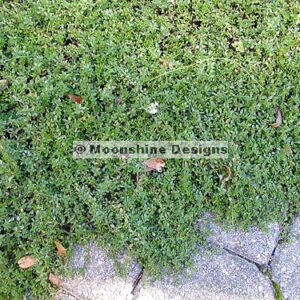
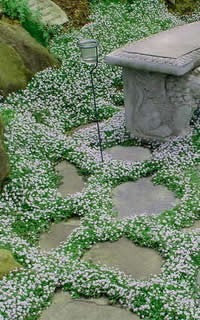
Thyme, Creeping, Common Plug Flat
Common Creeping Thyme is a native of northern Africa, Europe, and Asia, and has naturalized in North America. This fragrant, creeping plant has tiny, dark green leaves and in June, produces heads of white to purple flowers. Rarely gets more than 2″ tall. Excellent for use between flagstones in a pathway. Withstands light foot traffic and emits a pleasant scent when walked on. This variety tolerates more foot traffic than the other varieties.
125 count flats are grow-to-order and will backorder. Lead time depends on season. Generally 4-6 weeks in spring.

Thyme, Creeping, Lilac Carpet Plug Flat
T. Serpyllum Creeping Thyme is a native of northern Africa, Europe, and Asia, and has naturalized in North America. This fragrant, creeping plant has tiny, dark green leaves and in June, produces heads of lilac flowers. Rarely gets more than 2″ tall. Excellent for use between flagstones in a pathway. Withstands light foot traffic and emits a pleasant scent when walked on. Also known as “walk-on-me” thyme. Zones 4b (with protection)-10 Creeping varieties may seem tall in a plug flat since they have no where to go but on top of each other!
72 count plug flat sold as 70.
Back orders may require 4-6 weeks, depending on season.
IMPORTANT NOTE REGARDING THYME PLUG FLATS!!!
THIS IS A VERY HIGH DEMAND ITEM. FLATS MAY REQUIRE A MINIMUM LEAD TIME OF 4-6 WEEKS IF AVAILABILITY IS ZERO AND WE RECOMMEND THAT YOU ORDER AS EARLY AS POSSIBLE. LONGER LEADS MAY BE NECESSARY DURING PEAK SEASONS. FLATS SHIP 72 PLANTS PER FLAT, SOLD AS 70 OR 128 SOLD AS 125. FLAT GROUND SHIPMENTS LIMITED TO MARCH THROUGH JUNE AND SEPTEMBER THROUGH NOVEMBER. SUMMER ORDERS (JULY-AUGUST), MUST BE SHIPPED 2ND DAY OR NEXT DAY AIR. WE DO NOT RECOMMEND MID SUMMER OR MID WINTER SHIPMENTS OF FLATS UNLESS NEXT DAY OR 2ND DAY AIR. SHIPMENTS OF PLUGS SHIPPED USPS (US POSTAL SERVICE) ARE AT THE BUYER’S RISK! USPS SHIPMENTS ARE NOT INSURABLE! WILL CALLS ACCEPTED. PLEASE CALL FIRST. PICKUP IS BY APPOINTMENT ONLY.